Diary of the War: June 1917

The Sir Francis

At first glance the Sir Francis appears to be yet another British steam collier lost through enemy action in the North Sea, torpedoed 4 miles off Ravenscar, North Yorkshire, on a ballast run to the Tyne to pick up coal on 7 June 1917.

In that sense there is nothing remarkable about this particular wreck, which shares the characteristics of so many other ships of the same ilk, lost in the same sea area to war causes. not only during the First World War but also the Second. Even her tonnage of 1153 tons net, 1991 gross, was entirely characteristic of a steam collier of the early to mid 20th century, and she belonged to one of the big names in coal shipping, Cory Colliers Ltd.

Also fairly characteristic was the death toll: 10 men out of a crew of 22 lost their lives that day in June 1917. The Mercantile Marine Memorial at Tower Hill, London (listed Grade I) records their details so far as they were known. They were:

Wanless, A, master, whose place of birth, residence, and family is not recorded;

de Boer, J, seaman, born in Holland;

Jonsson, John, born in Iceland, resident in South Shields and married to an Englishwoman;

Kato, T, fireman, born in Japan;

Nishioka, B, fireman, also born in Japan;

Poulouch, N, fireman, born in Greece;

Sharp, Joseph, steward, of South Shields;

Talbot, Alfred, engineer’s steward, of Penarth;

Tippett, Albert, engineer, a Yorkshireman resident in Tyneside;

van der Pluym, Johannes Cornelis, seaman, a resident of Amsterdam.

Colour photograph of stone memorial inscription reading '1914-1918: To the Glory of God and to the honour of twelve thousand of the merchant navy and fishing fleets who have no grave but the sea'.
Detail of the Mercantile Marine Memorial, Tower Hill. By Katie Chan – Own work, CC BY-SA 3.0, https://commons.wikimedia.org/w/index.php?curid=28279403

Seafaring has, of course, always been a mobile profession with a long heritage, stretching back centuries, of crew serving aboard ships not originating in their local ports or country of birth, ocean-going liners and tramp steamers being obvious examples. On the blog we have looked previously at lascars engaged as foreign labour and subsequently shipwrecked on board ships plying to and from south Asia during the period of British colonial rule: Mahratta I, 1909; the Magdapur, 1939; and the Medina, 1917. The Tangistan is a good example of this phenomenon earlier in the war: when she was lost in 1915 en route from Beni Saf, Algeria, for Middlesbrough, her crew included men from the Indian Merchant Service and Scandinavian sailors.

The international composition of crews working on domestic routes appears to become more marked as the war continued. A primary contributory factor was, of course, the shortage of labour in the merchant marine, as experienced sailors were recruited into the Royal Navy, and the high death and injury toll among the crews of ships lost to war causes.  There were other factors, including international agreements (which will be covered in a later post). Undoubtedly, further research among the histories of each individual crew member might well reveal other factors at play: for example, rates of pay and war displacement (shipwreck by war causes and internment of vessels).

In July 1917, another collier, the Empress, would also be sunk in the North Sea with a truly multinational crew on a wholly domestic route, this time delivering coal from the Tyne to Southend-on-Sea. Among the survivors on that occasion were 3 Norwegians; 2 Argentines; 2 Swedes; and one man each representing Denmark, the Netherlands, Portugal, Russia (although at this period crewmen from the Baltic Grand Duchies of Russia were lumped under the ‘catch-all’ label of ‘Russian’ in contemporary sources) and Spain. Among the dead were Swede Peter Anderson [sic], able seaman; Norwegian Olaf Husby, boatswain; and Dutchman Peter van Klanders, fireman.

There is a similar tally on board a larger collier, the Polesley, which lost all but one of her 43 crew when she was torpedoed in 1918. Half came from diverse national and ethnic backgrounds. Some originated from various corners of the contemporary British Empire: three men from Sierra Leone, one man from the Bahamas and another from Nevis; a South African; one man from India; and another from Hong Kong. Others came from countries unconnected to the Empire: there were five Japanese sailors on board, and from Europe two Danes and two Lithuanians, a Norwegian, a Russian, a Spaniard and a Swede lost their lives.

These three specific cases among British colliers, the Sir Francis, the Empress, and the Polesley, shine a light on a hidden, but significant, heritage of multinational and multi-ethnic crew composition on British ships during the First World War.

(All crew details from the Commonwealth War Graves Commission website.)

Diary of the War: May 1917

The Gena

In the second instalment of our double bill covering 30 April and 1 May 1917 we take a look at the Gena, sunk on 1 May. On the face of it, Gena was fairly typical in both vessel type and location of loss, a collier sunk in the North Sea while steaming south with her cargo from Tyneside.

Yet there are two things which are very unusual about this particular wreck site. The first is that the position of loss is very precisely specified in relation to a relatively small and impermanent seamark.

She sank “¾ mile S by W ½W of ‘A’ War Channel Buoy, Southwold”. (1)

Unsurprisingly, with this level of detail, the wreck site has a secure history of recording that goes back to the date of loss. (2) It also gives some clue to the location of one of the buoys marking out the East Coast War Channels, or safe swept channels, that kept the shipping lanes open and (relatively) free of mines, swept largely by minesweeper-trawlers such as the Arfon whose loss on 30 April 1917 was commemorated in yesterday’s post.

These War Channels have been the subject of recent investigations on behalf of Historic England  (2014) by Antony Firth (Fjordr), illustrated with maps and charts showing the extent of the War Channels. One unofficial chart marking the buoys further north up the East Coast is known to have been used by an airman providing cover for North Sea shipping (Fig. 7 in report).

If aircraft could provide cover for shipping, tracking U-boats and indeed collaborating with patrol vessels to destroy enemy craft, it followed that ships were also vulnerable to attack from the air. The Gena was the first ship within English territorial waters to be sunk by aircraft, torpedoed from the air by two Hansa-Brandenburg GW seaplanes of Torpedostaffel II, operating out of Zeebrugge. This was not the first aerial attack on merchant shipping by aircraft, but it was one of the first to successfully sink a ship.

So unusual was it that Lloyd’s struggled to fit it into an appropriate category in their ‘ledger’ of war losses. In the “How Sunk” column, the standard abbreviations S (sunk by submarine) and M (mine) were clearly inappropriate, and even this distinction was outdated, since ships had been sunk by mines laid by U-boats since 1915, so arguably fitted both categories (see earlier post on minelaying submarines, introduced in 1915). The only other category available was C (cruiser or raider), which was still inadequate, but it seems that a new category was not considered necessary, and ‘raider’ was at least appropriate in intent, if not in ‘vessel type’ as such. A marginal annotation clarified matters: “German seaplane”. (3)

The Gena was an armed merchant, however, and her attackers did not have it all their own way. Sunk by the planes, her gunner nevertheless managed to down Hansa-Brandenburg 703, whose two crew were rescued to become prisoners of war. (4) An interesting photo gallery of the Hansa-Brandenburg GW can be found here, including stablemate 700, a view of the torpedo loading bay, and film stills of the aircraft landing on the water.

The course of the war at sea was changing: terror could strike from above as well as below, and aircraft though slow, unreliable, and terrifying to fly by modern standards, were proving to be amphibious and adaptable. Finally, the increasing presence of aircraft at sea meant that wrecks at sea were no longer necessarily ‘shipwrecks’, although, on this occasion, the aircraft was also picked up for examination: (see previous double bill on Zeppelin wrecks from February 1916 and March 1916).

The whole incident was recognised at the time as ‘a new phase of warfare’  and a ‘noteworthy development of aerial craft’ (5) so that, unusually for the time, the Admiralty released details of the ‘duel’, in part because there was some propaganda value in demonstrating that the Gena had not gone down without a fight.

(1) Lloyd’s War Losses: The First World War: Casualties to Shipping through Enemy Causes 1914-18, facsimile reprint, Lloyd’s of London Press, 1990, p127

(2) United Kingdom Hydrographic Office record no. 10320

(3) Lloyd’s War Losses: The First World War: Casualties to Shipping through Enemy Causes 1914-18, facsimile reprint, Lloyd’s of London Press, 1990, p127

(4) for example: http://1914-1918.invisionzone.com/forums/index.php?/topic/241938-naval-historynet-bvlas-errata/

(5) Yarmouth Independent, Saturday 5 May 1917, No.4,529, p1

Diary of the War: April 1917

A Mounting Toll: G42, G85, Ballarat, Medina, and HMT Arfon

In the first of this weekend’s double bill for 30 April and 1 May 1917 we look at the continuing attrition of British and foreign shipping. On 6 April 1917 the United States declared war on Germany, as unrestricted submarine warfare also began to take its toll on American ships. Within the extent of English territorial waters as currently defined, the figures demonstrate that 71 wrecks were recorded for this month, of which 32 represent sites, the majority positively identified.

At this point during the war, there were no U-boats reported sunk within English waters for the month of April 1917, appearing to underline the success of the continuing submarine campaign.

German warships were also active in the Channel, mounting a raid on the Dover Patrol on the night of 20-21 April and shelling Margate and Ramsgate on 27 April. In contrast to the lack of sinkings of U-boats, however, two German torpedo boats, G42 and G85, were sunk as the raid developed into the Battle of Dover Straits. G42 was rammed by HMS Broke, while HMS Swift despatched G85 with a torpedo, making these vessels the only two German warships sunk in English territorial waters during the war.

The closing week of April 1917 provides a cross-section of the war at sea:

On 25 April 1917 the Australian troopship Ballarat, was torpedoed, but fortunately without loss of life. Ironically, it was the war itself which was probably the major factor in saving the lives of all on board when she was torpedoed. On that day all were mustered at their stations for a deckside Anzac Day service, remembering their fallen compatriots at Gallipoli in 1915, which in turn allowed for an orderly evacuation.

On 28 April 1917 the P&O liner RMS Medina was sunk. Her history was intertwined with that of the contemporary British Empire and its liner routes which continued to ply during wartime. Her maiden voyage in 1911 was as a Royal Yacht taking King George V and Queen Mary to Delhi for the Durbar of 1911, after which she reverted to the commercial role for which she was built. On her final voyage she left India with passengers and cargo for Sydney, New South Wales, to take on Australian meat and thence for England via the Suez Canal. She was torpedoed off Start Point, the torpedo exploding in the starboard engine room, killing six men, five of them seamen from the Indian subcontinent, known as lascars, who had a long tradition of working aboard British ships, usually, as here, in the engine room. (See previous posts on the Mahratta I in 1909 and the Magdapur in 1939 for more on wrecks involving lascars.)

On 30 April 1917 HM trawler Arfon was mined while on minesweeping duty off the Dorset coast with the loss of ten lives. She lies virtually intact with her minesweeping equipment and deck gun in situ, a rare but representative example of an early 20th century steam trawler adapted for war purposes, and as such was designated under the 1973 Protection of Wrecks Act in 2016. A new interpretation board at St. Aldhelm’s Head commemorates the site, while an accessible fully-captioned video trail released for the centenary explores the site through 3D high-resolution images.

The last week of April was therefore a crucial week of a crucial month.

The statistics outlined in Lloyd’s War Losses for April 1917 make grim reading. Over the course of the month 220 British, 103 Allied and 135 neutral vessels had been sunk worldwide for 882,227 tons. (1) Statistics for recent shipping losses were published in the press, followed by a stark warning in Parliament which was widely reported.

‘One hears on many sides that people refuse to be rationed or to ration themselves, because they say the shortage is only newspaper talk.

‘The position is now plain, that if within the next six or eight weeks there is not a very substantial reduction “there will be no alternative but to apply compulsion.” (2) That meat aboard RMS Medina, for example, had not got through.

(1) Lloyd’s War Losses: The First World War: Casualties to Shipping through Enemy Causes 1914-18, facsimile reprint, Lloyd’s of London Press, 1990, p127

(2) Daily Telegraph, April 26 1917, No.19,356, p5

Diary of the War: March 1917

Mousse Le Moyec

This is the tale of two events across the Channel – one in French waters on this day a hundred years ago (29 March 1917) during the First World War, and a later wreck in English waters from the Second World War, linked by a name.

The latter was one of the very first wrecks I ever encountered on the database 20 years ago, with the unusual and evocative name of Mousse Le Moyec. The name has stuck with me ever since: mousse means ‘ship’s boy’ in French (“a young sailor under the age of 17”, according to Larousse) so I always wondered who he was and why he was commemorated by having a ship named after him.

On 29 March 1917 a French sailing trawler, the Irma, took up her station 15 miles SSW of Cordouan, off the Gironde, France, with her crew of five. As she was preparing to shoot her nets, a U-boat commenced shelling the vessel, approaching closer with each shot. The ship’s boat was shot away and mousse Maurice Le Moyec, aged 14, was killed.


Enfant Moyec2
Commemorative plaque for mousse Maurice Le Moyec, stating his date of death as 29 March 1916 (in error for 1917). La Rochelle © and by kind permission of M Bruno Baverel

The master was seriously injured, but the other three members of the crew, the mate, aged 18, and two boys, aged 15, remained calm under fire, even though also injured, and got the little ship back to the Gironde under a jury rig. The survivors were decorated for gallantry.

After the war, a number of French colliers were built for the French Government to a standard design, each named in honour of one of those who had fallen for France. The vessel named after mousse Le Moyec was built for a company which had also lost a ship called Irma, in 1916, so it may be that there was some confusion over the ship on which young Le Moyec was lost.

This collier, commemorating a victim of the First World War, would play her part in the Second. In the 1920s and 1930s she regularly criss-crossed the Channel to pick up Welsh coal for France. After the fall of France in 1940, she was therefore a natural candidate to bring over a number of young Frenchmen to Britain, answering de Gaulle’s call for Free Frenchmen to join him in the fight against the Nazis. Their story can be read here (in French): one of those passengers was André Quelen, who is remembered here (in English).

As with so many other vessels which escaped to Britain from occupied Europe, she was then placed at the disposal of the British Government (my own father travelled on a Dutch trooper under the British flag, which had escaped the night Amsterdam fell). Mousse Le Moyec continued to ply her usual trade as a collier, but solely within English waters on the Bristol Channel – Plymouth run, until she was wrecked near Hartland Point in December 1940.

When I first encountered Mousse Le Moyec all those years ago, the internet was in its infancy and it was difficult to find out more. Thanks to the power of online resources, in particular the French pages14-18 forum, I have been able to discover the moving connection between a wreck in English waters in 1940 and the French counterpart of Jack Cornwell, of Jutland fame, who died 100 years ago today, a reminder of cross-Channel co-operation in time of war.


Diary of the War: January 1917

Henry Blogg and the Fernebo

On the stormy winter morning of 9 January 1917, a distress signal brought out the lifeboatmen of Cromer in their lifeboat Louisa Heartwell, which launched into heavy seas to reach the Greek steamer Pyrin, drifting two miles out at sea. Since all men of fighting age were away at war, the lifeboat crew were all either middle-aged or elderly men, and were led by coxswain Henry Blogg, who had joined the crew in 1894, and a relative youngster at the age of 40. It took a party of 40 men, including soldiers, to launch the lifeboat, and over two hours for the crew to reach the wreck and successfully rescue and land 18 survivors.

henry-blogg-modified-photo-1
Henry Blogg. RNLI

In the middle of this force 9 gale, another ship got into difficulties. The Swedish Fernebo, en route from Gavle for London with timber, was in distress, lurching in the sea with one crew member injured – and was even further out to sea, between 3 and 4 miles offshore.

The very wildness of the weather meant that none of the other local lifeboats could put out to the rescue the crew of the Fernebo in the stead of the Cromer lifeboat. The Louisa Heartwell was the nearest and the only suitable craft, being larger and heavier than other local lifeboats, but several attempts to launch her failed, even with all the willing helpers from the town.

A party of men aboard Fernebo saw their chances of rescue slipping away and took matters into their own hands, launching one of the ship’s boats. Almost at the shoreline the vessel capsized and it took a party of onlookers, led by Private Stewart Holmes, one of the soldiers stationed locally, to rescue them by forming a human chain at the risk of their own lives. By this means all six men were rescued from their little boat, which had somehow made it all the way to shore despite the storm.

In the meantime further disaster had literally struck the Fernebo, in the form of a mine laid by UC-19, which had been caught and depth-charged off the Isles of Scilly in the previous month, leaving behind a deadly legacy of sown mines. The explosion split the steamer in two, but her timber cargo kept both halves afloat: fortunately all the crew were in one half, rather than drifting apart on two different wrecks.

The storm drove the stricken Fernebo closer inshore, where, around 5pm, both parts struck Cromer beach, but in different locations. The aft section of the Fernebo came ashore near the groyne at the Doctor’s Steps, Cromer. Once more it was clear that only the Cromer lifeboat and her crew stood between the Swedish sailors and death: with the help of army searchlights trained on the beach and the wreck, further attempts were made to launch. Once launched, several oars were wrenched from the lifeboatmen’s hands and others broken by the violence of the sea, so the crew had to put back then, then return with fresh oars.

At last – success! The crew managed to reach the survivors, safely bringing off eleven men, eleven people who would have died had it not been for the ‘great intrepidity, splendid tenacity, and endurance’ quoted in the citation for the RNLI’s gallantry award to the Louisa Heartwell‘s crew. (1)  This was the occasion on which Henry Blogg, the ‘greatest lifeboatman of them all’, received his first RNLI gold medal, but the entire crew also received awards, with another being made to Pte. Holmes, leader of the shore party which rescued the six men from the boat.

Black and white photograph of two rows of en, seated in front, standing at the back, in front of the open doorway through which the bows of a lifeboat can be seen.
The crew of the Cromer lifeboat, wearing the medals awarded for this rescue. RNLI

But for the courage of the Cromer lifeboatmen, the Fernebo‘s crew would all have shared in the fate of their injured colleague, who was killed when they struck the mine. This was certainly a rescue against all the odds, when human endurance overcame the power of nature and the violence of war.

Colour photograph of ribs of wreck, partly covered in seaweed, in the foreground of the image, on a beach, which stretches to the background of the image. The top sixth of the image is taken up by a flat band of blue sky and sea.
The wreck of the Fernebo as she now lies at Cromer. RNLI

Over 5,000 lives were saved by the RNLI during the First World War: their work is showcased in an RNLI travelling exhibition Hope in the Great War, which is touring the country for the duration of the centenary. It features the Fernebo, and another rescue we have already featured in the War Diary, the Rohilla. Do go and see it – check for a venue near you.

(1) Widely reported in a nationwide press release, for example in the Newcastle Journal,  13 February 1917, No.22,371, p3

No.90 The fishing fleets strike back

Diary of the War No.13

Following on from last month’s War Diary post about a group of Lowestoft fishing smacks captured and sunk by scuttling charges, this month I look at an occasion when the tables were turned. As previously mentioned, one of the outcomes of the attacks on fishing vessels was the arming of selected smacks to patrol and protect their number when out at sea.

On 11 August 1915 UB-6 sank the fishing smack Leader 20 miles NE of Lowestoft, before being warned away by gunfire from the armed smack G & E. It was thought that G & E had sunk the submarine, but it was later ascertained that this was not the case, and UB-6 had limped home to give intelligence that fishing smacks were standing up for themselves.

Four days later, on 15 August, UB-4 approached to try her luck with another fleet of smacks off the Smith’s Knoll Spar Buoy, in the fishing grounds off Norfolk. The Inverlyon was also fishing when UB-4 began to approach at about 8.15 pm, closing within 30 yards. ‘It was dusk and no better target could be expected’. (1)

However, UB-4 was not prepared for what happened next. Inverlyon was not just out to catch fish. She had also assumed a new role just under a fortnight earlier. Gunner Ernest M Jehan of HMS Dryad was in command, and hoisted the White Ensign, firing a revolver at the officer steering the submarine. This was not so much to hit his opponent personally, as to signal to his crew to open fire with their 3pdr gun.

Nine rounds of fire disabled UB-4. According to Gunner Jehan’s report: ‘1st, 2nd, 3rd and 4th shorts striking conning tower, 5 and 7 over, 6, 8 and 9 hitting hull.’ (2) She sank ‘head down, at an angle of 80°’. (1) Jehan continued: ‘3 bodies appearing, one shouting. Skipper Philips undressed and swam with lifebuoy but could not reach man before he sank. . . .We are lying by trawl which is foul of submarine.’

According to British naval intelligence, UB-4 had set out from her Flanders base before the return of UB-6 ‘taught by the G & E that some smacks were to be respected’, and thus was unaware of this new British anti-submarine tactic. It was a rare success in modern warfare for a small sailing vessel of 59 tons to sink a submarine, even a submarine as small as a UB-I class vessel of 127 tons surface displacement.

And Inverlyon? Like so many Lowestoft smacks before her, she too would eventually be captured and scuttled, but this would not happen until 1 February 1917.

(1) Naval Staff Monographs (Historical), Vol. XIV, Home Waters: Part V: July to October 1915, Admiralty, London, 1926

(2) His handwritten note, repr. in Taffrail, (Taprell Dorling), Swept Channels, Hodder and Stoughton, London, 1935


No.81 Gallipoli

Diary of the War No.9

To commemorate the centenary of the Gallipoli landings, which commenced on 25 April 1915, today’s post takes as its theme two wrecks in English waters: one which participated in those landings, and another transporting Anzacs (Australian and New Zealand Army Corps), so closely associated with the Gallipoli campaign.

Colour poster of a swimming man, captioned 'It is nice in the surf but what about the men in the trenches'
‘Win the War League’ poster promoting Australian recruitment during the First World War. IWM PST 12232. http://www.iwm.org.uk/collections/item/object/25051

The Fauvette was constructed in 1912 for the General Steam Navigation Company, and employed on the London-Bordeaux run, from which she evacuated British nationals when war broke out. Like so many other civilian vessels, she was requisitioned for war service, becoming HMS Fauvette in February 1915, and heading straight for the Dardanelles. By April 1915 she was carrying stores for the Allied landings. On 21 April, the crew of HMS Fentonian, a requisitioned trawler, had difficulties offloading Fauvette‘s buoys: ‘the sinkers were enormous blocks of cement weighing 35 cwt.’ (1) Fauvette continued to see service in and around Gallipoli, Mudros and Suvla Bay until the following year.

On her return to England on 9 March 1916 she struck two mines laid by UC-7 approximately 1.75 miles NE of the North Foreland and sank with the loss of 14 lives. Her position has been securely recorded since 1916 and she was earmarked for post-war dispersal, achieved by 1921. She lies within half a mile of the Emile Deschamps, whose story is told in a previous post, also mined close to home but in a different war.

A few weeks later, 25 April 1916 saw the first Anzac Day commemorating the contribution of Australian and New Zealand troops in the ill-fated Gallipoli campaign. Ironically, it was on the second Anzac Day on 25 April 1917 that today’s second featured wreck was lost. The Ballarat, a P&O liner built for the Australian emigrant service, was another requisitioned ship, serving as a trooper, shuttling to and from Australia.

On her final voyage the men were being mustered for an Anzac Day service when a torpedo, or “Tinned Fish” as one survivor put it, struck her aft on her port side, tearing off her propeller. (2) She began to settle by the stern, so the order was given to abandon ship, but when the engineer reported that the vessel was capable of limping on, the men were recalled and volunteers requested to man the stokehold. As luck would have it, the Ballarat was carrying men of the Railway Operating Division, who were well used to stoking steam engines, albeit on the rails rather than on the high seas!

However, the engine was flooded, so once more all were lined up to abandon ship. Well over 1,500 people were safely evacuated, including the hospital cases: the Times reported that the two nurses and three chaplains aboard assisted the men to fasten their lifebelts. The parade itself, and the continuous boat muster drill they had practised during the voyage, could be said to have prevented this from becoming another tragedy of the Great War. The men were allowed to take photographs, including one extraordinary view of serried ranks of soldiers awaiting evacuation and during the evacuation itself, leaving behind a well-documented wreck. Efforts to save the ship continued, and she was taken in tow, only to sink 7 miles SW of the Lizard, Cornwall.

Wartime censorship meant that the loss was only officially announced on 2 May. The press and the Australian High Commission praised the orderly evacuation, and the sang-froid of the survivors who sent ‘representatives to London to get a souvenir of the event printed in the form of the last number of the Ballarat Beacon, which was being distributed when the ship was torpedoed.’ (3) And a final word: the Times took care to note that 15 of those rescued were also survivors of the ordeal at Gallipoli.

More Gallipoli news: Historic England has just listed war memorials associated with Gallipoli.

Hand-drawn black and white magazine cover depicting the Ballarat steamship at sea, flanked by two beacons, and a cartouche in contemporary lettering with the title 'The Ballarat Beacon'
Front cover of the Ballarat Beacon, Vol.1, No.1, 1917, National Library of Australia, http://nla.gov.au/nla.cat-vn3304869

(1) “Dardanelles: Narrative of Mine-Sweeping Trawler 448, Manned by Queen Elizabeth: the landing at “Z” Beach, Gallipoli” Naval Review, Vol.IV, No. 2, 1916, pp185-197. URL: http://www.naval-review.com/issues/1910s/1916-2.pdf 

(2) Memoirs of Hector Creswick, 15 Company Railway Operating Division, http://www.australiansatwar.gov.au/stories/stories_war=W1_id=103.htm

(3) The Times, No.41,468, 3 May 1917, p6

No.78 U-8, Straits of Dover

Diary of the War No.8

On 4th March 1915 the first confirmed loss of a German U-boat in English waters during the war took place with the capture of U-8 off Dover, the culmination of a hunt that began when she was spotted in the Channel by HMS Viking. Viking opened fire, forcing U-8 to submerge but not without returning fire with a torpedo which missed its target, and U-8 was lost to sight.

Black and white illustration of U-8 submarine on the surface being approached by a destroyer, the crew assembled on the conning tower appealing for help.
Postcard of a contemporary illustration of U-8 being approached by a British destroyer. It is a work of subtle, as well as overt, propaganda, the text being complemented by the viewpoint from the side of a British destroyer, her lifeboat hanging from its davits, suggesting British humanity in coming to the rescue of an enemy crew appealing for help. By courtesy of Mark Dunkley

As the submerged U-8 continued on her way through the Straits of Dover, she became enmeshed in an anti-submarine net barrage. The requisitioned drifter Roburn spotted movement in the nets, and alerted the destroyers of the Dover patrol for assistance. The destroyer Ghurka* towed an anti-submarine sweep wire. These wires were fitted with explosive charges which detonated on contact with the target. Successful contact forced U-8 to the surface, whereupon Ghurka and Maori opened fire.

The crew were taken off and an attempt was made to tow the submarine back to Dover, but she foundered approximately one and three-quarters of a mile west of the southernmost tip of the Varne Bank, where she has now been positively identified by internal features.

The rescued crew, now firmly in British custody, were lined up at Dover on arrival. As the Daily Telegraph for 6 March 1915 (p9) had it: “The Germans were for the most part sturdily-built fellows – no doubt the pick of the German naval service mans the submarines”. The prisoners were marched through the town, escorted by the garrison of the Castle, and a crowd of local sightseers curious to see the enemy, to the Castle itself.

A view of Dover Castle on top of the hill, with the town below.
Dover Castle viewed from the High Street, Dover DP049659 © English Heritage Picture Library

The official Admiralty communiqué quoted in the paper gave away few details, stating only that U-8 had been sunk in the Channel off Dover, but the human interest aspect of the prisoners’ reception more than made up for it, as did the speculation over the intelligence value of the submarine (p8) and what it was thought to reveal about the U-boat war.

As for Roburn and Ghurka, they resumed their successful patrols off Dover, but they, too, were destined to fall victim to enemy action in the Straits of Dover. Roburn sank on 27 October 1916, after being shelled in a Channel raid by German torpedo boat destroyers. She was lost together with a Tribal class destroyer, which formed the nucleus of the Dover Patrol (Ghurka, Maori and Viking, as their names implied, were also Tribal class ships). Ghurka herself was mined on 8 February 1917 off Dungeness, and is one of those vessels whose remains are designated under the Protection of Military Remains Act.

The seabed of the Straits of Dover reveals a common heritage of sunken British and German vessels, a memorial to the warfare on the surface a century ago.

*not a misspelling: she was indeed Ghurka, rather than Gurkha.

No.55: Sambut

Two sections of Mulberry Harbour used for the D-Day landings of 1944 and relocated to Portland Harbour in 1946. Listed Grade I
Old and new: Two sections of Mulberry Harbour used for the D-Day landings of 1944 and relocated to Portland Harbour in 1946, as seen from Portland Castle. Listed Grade II. (Image courtesy of Andrew Wyngard)

D-Day

[This blog entry was originally written to commemorate the 70th anniversary of D-Day, 6 June 2014, and has been updated for the 75th anniversary, 6 June 2019.]

Today, on 6 June, I would like to turn my attention to a wreck which took place shortly after noon on 6 June 1944.

Although the south coast was the prime departure location for D-Day, it’s important to remember that other ports also contributed to the huge invasion effort with ships, men and materials crossing the Channel from other ports. Air cover and support operations for Normandy also took place from airfields that were not necessarily the closest to the invasion sites, such as RAF Rivenhall/USAAF Station AAF-168.

The Thames was another focal point of activity in the run-up to the Normandy landings and beyond. For example, in the run-up to D-Day aircraft struck at the Pas-de-Calais, drawing enemy attention away from the actual invasion site, as part of Operation Fortitude, a co-ordinated deception operation. The Thames also played its part on D-Day itself.

On D-Day -3, 3 June 1944, troops had embarked on SS Sambut in London, including members of the 92nd Light Anti-Aircraft Regiment of the Royal Artillery. (1) It was common during wartime for embarkation to take place several days beforehand and there were cases later in 1944 when troops ‘swung at anchor at Glasgow in the murk for five days before we finally set sail.’ (2) On 6 June 1944 convoy ETM-1 left Southend under the command of Captain Willis, bound for Normandy, composed principally of escorts and American Liberty ships loaned to Britain under the Lend-Lease programme, Sambut sailing with her sisters Samark, Samarovsk, Sambut, Samdel, Saminver, Sammont, Samneva, Samos, Sampep, Samphill, Samvern, and Samzona, (3) carrying troops, vehicles, and ammunition. Cargo was stowed inside other cargo to maximise space: lorries were filled with motorbikes in some cases, gelignite in others.

Unfortunately, shells fired at random from German gun batteries on the Calais side struck the Sambut off Dover at 1215. Lorries and petrol cans on deck caught fire, followed by a gelignite explosion in the hold. The troops tried to jettison some of the munitions but it was quickly realised that it was a futile effort. Within 15 minutes the order was given to abandon ship, and by 1245 the ship had been completely abandoned, although not without the loss of 136 crew and military personnel out of 625 (562 military/63 crew) on board. (4)

She was the first Liberty ship to be lost in Operation Overlord, half way through D-Day itself: other Liberty ships would follow as the Normandy campaign wore on over the ensuing weeks and months, such as the well-known Richard Montgomery, also off Southend, in August 1944.

The Sambut shares several features in common with other 20th century wartime wrecks. Primarily, of course, her combustible cargoes contributed to her loss, but blazing wrecks in navigational channels were also a danger to other shipping, and this hazard was compounded under wartime conditions by their potential to direct enemy attention towards operations.

Her master had been ordered to lower the ship’s barrage balloon to make the vessel less conspicuous against the white cliffs of Dover, but it was already too late: either the ship had already been spotted or the barrage from the shore had managed to score a lucky hit.

As with the War Knight off the Isle of Wight in 1918, so with the Sambut in the Straits of Dover in 1944: the burning ship was scuttled by her own side, as the Royal Navy fired a torpedo to finally sink her. (5)

One other feature of 20th century wrecks, as we have often recorded in this blog (for example, the Ballarat, 1917) is that they tend to be well-documented by ‘real-time’ evidence in a way that was not possible before the advent of photography, and of course it then became critical to document operations as they unfolded, for both record and propaganda purposes. This moving film in the IWM Collections records a church service aboard Samarovsk followed by a view of the Sambut on fire, with explosions visible at intervals.

At one and the same time the vessel is characteristic of the archaeological remains of 20th century conflict around the English coastline, and a unique reminder of a specific day which turned the tide of the war.  Today she lies intact and upright on the seabed, a tangible reminder of 6 June 1944.

(1) William Wills, “92 LAA Regt. Loss of the Sambut on D-Day“, BBC People’s War archive, 10 July 2005

(2) Oral history reminiscence, Corporal Cant RAF, Convoy KMF 36, November 6, 1944

(3) Convoy ETM-1, Arnold Hague Convoy Database

(4) Tom McCarthy, True Loyals: A History of 7th Battalion, The Loyal Regiment (North Lancashire/92nd (Loyals) Light Anti-Aircraft Regiment, Royal Artillery, 1940-1946, 2nd ed., Countyvise Editions Ltd., Birkenhead, 2012, republished online

(5) ibid.

(6) UKHO 13665

21. Meat and No Veg

This week I’d just like to have a quick look at the Albany, which came ashore between Sidmouth and Branscombe in 1887 with a cargo of hides and horns from:

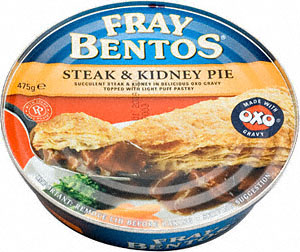
648317

Fray Bentos is not just a well-known British brand name (which may be better known to those of us d’un certain age – not that I have ever eaten one), but also a port in Uruguay, built on the meat processing industry which supplied just such steaks as comprised this early version of a convenience meal. The hides and horns laden onto the Albany must certainly have been a by-product of this industry. Tallow, rendered from animal fat, and used for candles, was often also included in such cargoes of meat by-products.

As you might expect, the numbers of wrecks laden with meat and associated products, reflect the heyday of the late 19th and early 20th century South American meat trade. These long-distance exports were only really made possible by the canning process – the can is as much part of the heritage as the branding of Fray Bentos pies and is very much a reminder that something we think of as quintessentially British often turns out not to be so!

Refrigeration facilitated the process, in which Nelson Line, already a specialist on South American routes, invested heavily. Among the Bedford Lemere ship photos in the Historic England collections are several of the Nelson Line Highland Mary, 1911, including this one of her refrigerated holds.

Another Nelson Line ship carrying meat, the Highland Corrie, was torpedoed in 1917 in the Channel.