No. 93 Ionic Star

Degrees of separation 

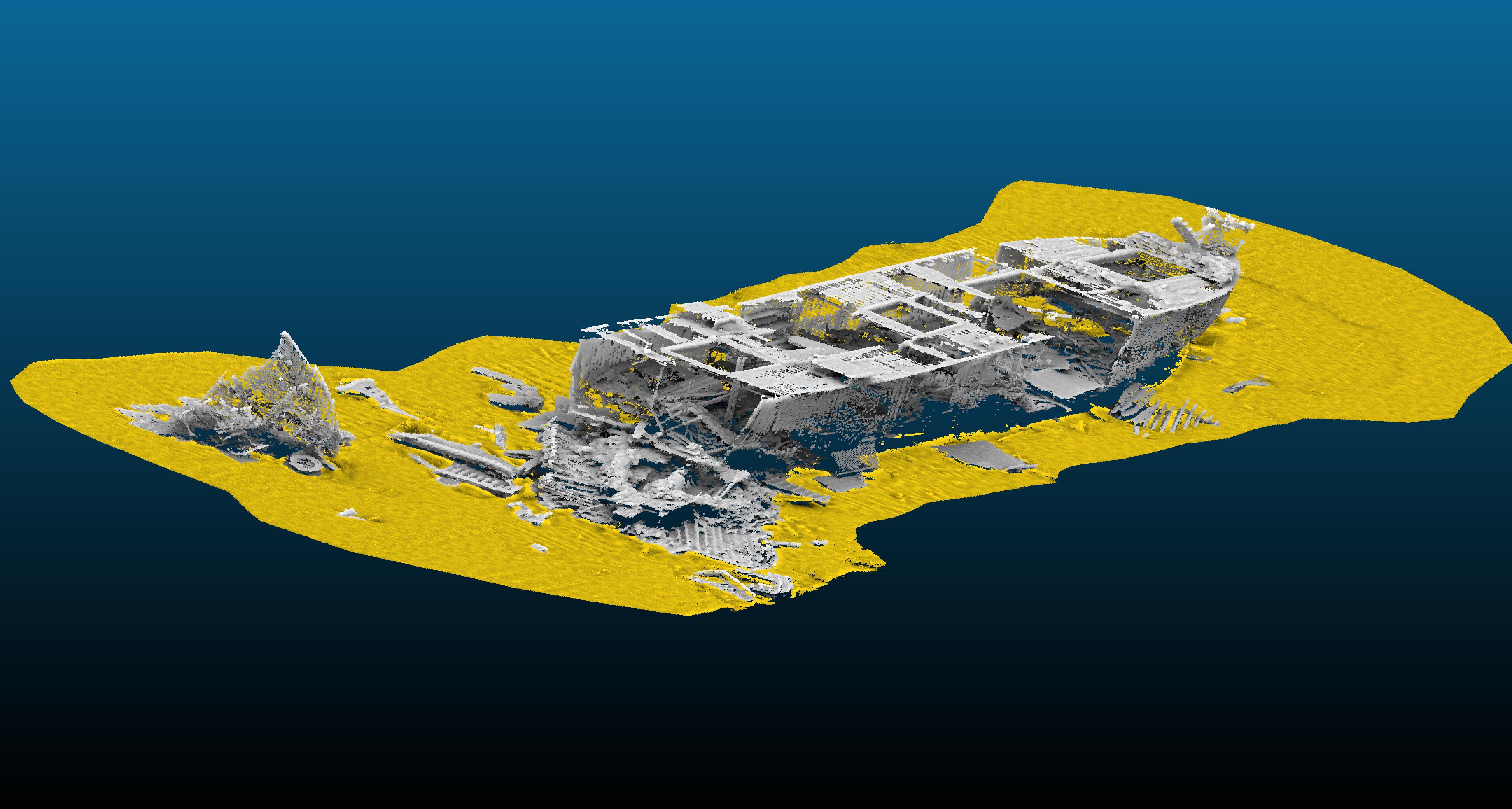
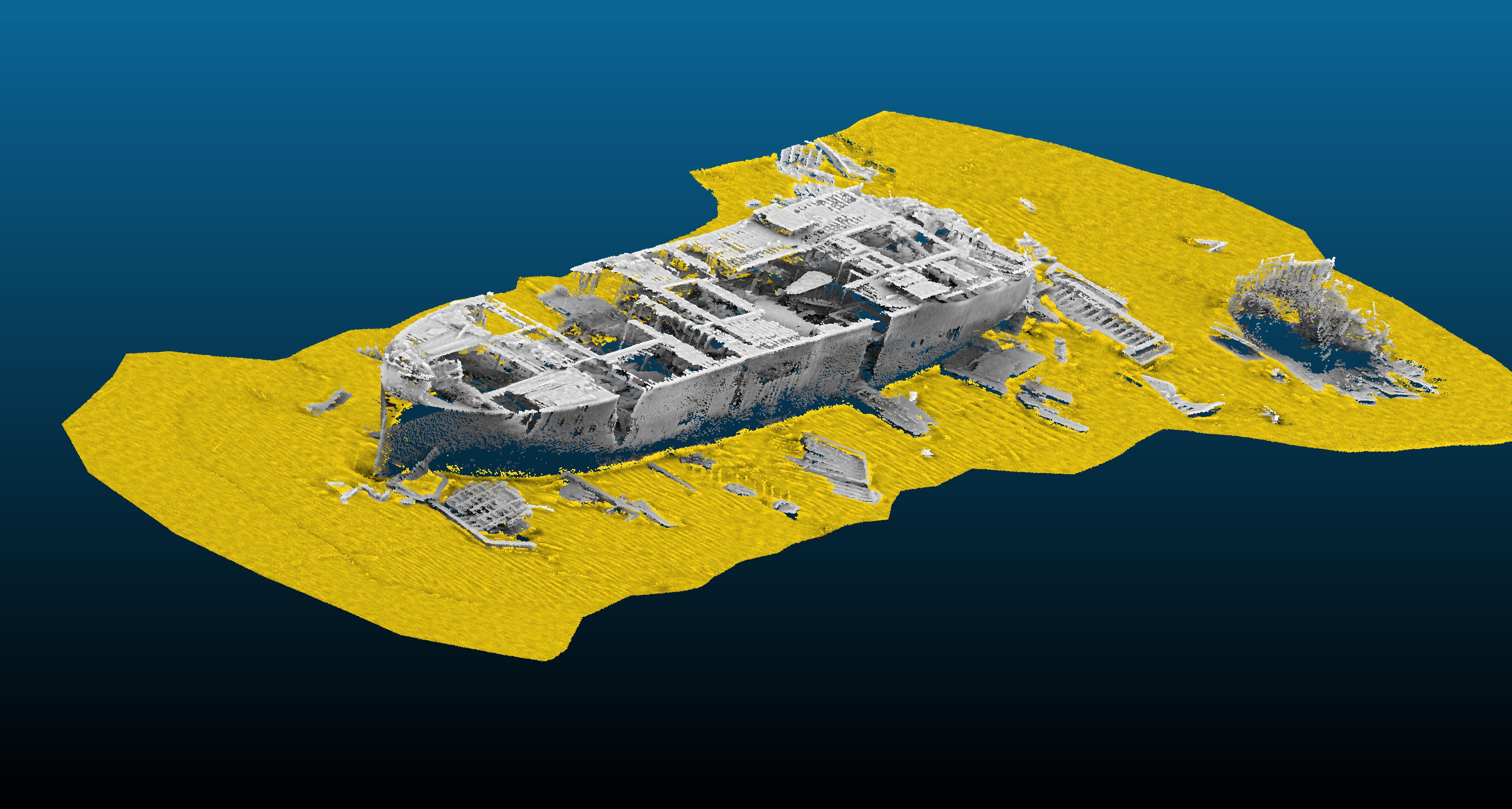
Today I have the pleasure of introducing my guest bloggers Mark Adams, Archaeological Services Manager, Museum of Liverpool, and local historian Martyn Griffiths, who describe the wreck of the Ionic Star on the anniversary of her loss in 1939. The Ionic Star has a connection with one of the most famous wrecks of the Second World War in fewer than ‘six degrees of separation’, as Mark and Martyn demonstrate in words and pictures below. For more links, please see the bottom of the article, including drone footage of the site as she now lies. Many thanks to them both.

The Sefton Coastline in Merseyside is a belt of wide sandy beaches and dunes which run from Formby in the south to Southport in the north. Possibly better known to archaeologists for the prehistoric footprints recorded by Gordon Roberts, the area also has a rich maritime history, largely a result of its location on the approaches to Liverpool. This includes the remains of Britain’s first Lifeboat Station and several shipwrecks, some of which are accessible by foot in the company of an experienced guide.

One of these wrecks is the Ionic Star, which was researched by a local historian, Martyn Griffiths. Built in 1917 by Russell & Co. of Glasgow, she was a refrigerated cargo liner with dimensions of 389.8 x 53.2 x 32.4 feet, and had a triple-expansion steam engine by D. Rowan & Co., Glasgow. Launched as the Rubiera, she belonged to the Blue Star line and was renamed the Ionic Star in 1929.

Black and white photograph of steamship in side view, depicting a star logo on the funnel amidships.
Ionic Star, showing the Blue Star logo on her funnel.

She was wrecked on October 16th 1939, after having lost her way whilst steaming up the Mersey Channel. She was carrying a cargo of meat, fruit, and cotton and was inward bound from Rio de Janeiro and Santos in Brazil to Liverpool, but sank on the edge of Mad Wharf, about one mile west of Formby Point. Her cargo was saved and no lives were lost, though she later became a total loss.

Although a salvage firm tendered for the job of breaking her up for scrap and the offer was accepted by the Mersey Docks and Harbour Board, the difficult access with the rising and falling tides meant that they were only able to break up about 50 tons and then gave up the job.

During the war she was used as target practice by aircraft flying from the nearby RAF Woodvale and elsewhere, but a considerable amount still remains firmly embedded in the sand and she remains a significant local landmark.

View of shipwreck on sands at sunset, showing skeleton of vessel.
View of Ionic Star as she lies today on Mad Wharf, showing a significant break in the hull structure. © Martyn Griffiths

The Blue Star Line had several other steamers in their fleet at the time, one of which was the Doric Star. It was this steamer that only two months later on the 2nd December 1939 was to be sunk by the German Battleship Admiral Graf Spee off the coast of South Africa – rather a bad few months for the Blue Star line. Only 15 days were to go by until the Graf Spee herself was scuttled outside the harbour at Montevideo in the Battle of the River Plate.

Black and white photograph of German warship on fire and sinking, with smoke billowing out of the vessel to the right.
Graf Spee on fire following the Battle of the River Plate, December 1939.

The site was recently used for a test-flight of a UAV by Prof David Burton of the General Engineering Research Institute, Liverpool John Moores University, who supplied the dramatic video in the Youtube link.  The long-term aim of the group is to use a range of telemetry, including LiDAR, mounted on UAVs to provide a means of recording otherwise inaccessible sites such as the Ionic Star.  The flight was also run as part of a guided walk to the site organised by the Sefton Coast Landscape Partnership and Archaeological Services, Museum of Liverpool.

Links: 

http://www.bluestarline.org/ionic1.html

http://www.martyngriff.co.uk/page12.htm

http://formby-footprints.co.uk/

http://www.formbycivicsociety.org.uk/2003%2003%20originsbritainsfirstlifeboatstation.html

http://digiart-project.eu/consortium/ljmu/ljmu-geri/

http://www.liverpoolmuseums.org.uk/mol/archaeology/
https://www.youtube.com/watch?v=cph79ESYaWE

https://www.youtube.com/watch?v=OKEH-GsbvPk

No.79 James Eagan Layne

In this week’s post, we commemorate the loss of the US Liberty Ship James Eagan Layne 70 years ago on 21 March 1945, torpedoed while bound from New Orleans, last from Barry in Wales, for Ghent with what was then termed ‘Government stores’. Translated, that meant military vehicles and other war materials destined for the liberation of Europe as the war was drawing to a close. Historic recoveries from this vessel have included numerous shell cases. (1)

The forward section of the James Eagan Layne wreck, using modern bathymetric imagery allowing a view into the ship
Forward section of the James Eagan Layne, by courtesy of MSDS Marine and Swathe Services. There is much scattered debris, evidence of extensive post-war salvage.

The James Eagan Layne was one of several Liberty ships and other vessels bound for Belgium in the spring of 1945, following the successful conclusion of the Battle of the Bulge in January 1945. The Allies had repulsed the German advance, or ‘bulge’ in their lines, with heavy loss of life, particularly among the US troops who bore the brunt of the fighting. Allied access to the Belgian ports was now secured, barring minefields and U-boats, resuming the communication links severed by the fall of Belgium in 1940.

The pattern of wrecks on the seabed mirrors the fate of those communication links. Ten ships, bound either to or from Belgian ports, were sunk in English waters following the declaration of war in September 1939. It was a similar figure in early 1940 prior to the fall of Belgium in May, with 11 ships sunk by mine or torpedo on the same route.

The aft section of the James Eagan Layne wreck, using modern bathymetric imagery allowing a view into the ship, and showing scattered debris
Aft section of the James Eagan Layne, by courtesy of MSDS Marine and Swathe Services. This image allows an insight into the box-like construction characteristic of the Liberty Ship.

Transport links with occupied Belgium were then severed and are reflected in the lack of corresponding wrecks from late 1940 to early 1945: then, as Allied ships were once more able to reach Antwerp and other ports, there was also a recurrence of wreck events. Between January and May 1945, 10 ships are known to have been sunk in English waters en route to or from Belgium: they included other Liberty Ships, the Henry B Plant and the James Harrod. The John R Park was also torpedoed the same day as the James Eagan Layne, albeit on a different route, bound from England for the United States.

For more on the James Eagan Layne, please have a look at the dedicated SHIPS (Shipwrecks and History in Plymouth Sound) and Promare Liberty 70 site.

(1) Receiver of Wreck droits.

With many thanks to MSDS Marine and Swathe Services for permission to reproduce these beautiful images.

No.73 HMS Formidable (Diary of the War No.6)

Lifebelt from HMS Formidable washed up on the Dutch coast during the First World War, presented to the Imperial War Museum in 1920. © IWM (MAR 66)
Lifebelt from HMS Formidable washed up on the Dutch coast during the First World War, hundreds of miles from the site of the sinking in mid-Channel off the Bill of Portland. Presented to the Imperial War Museum in 1920. © IWM (MAR 66) http://www.iwm.org.uk/collections/item/object/30004000

As the year turned to 1915, the 5th Battle Squadron were deployed in the English Channel some 25 miles off the Bill of Portland on exercises, among them HMS Formidable, a pre-dreadnought battleship of 1898. Two hours and twenty minutes into the New Year, as the fleet crossed the path of some fishing vessels, and the weather began to worsen, a torpedo launched from U-24 roared out of the dark and into the Formidable. She began to list to starboard, compounding the difficulties of getting out the boats at night and in rough weather.

Twenty minutes later another torpedo struck the Formidable, causing her to capsize and sink completely at about 4.45am. One survivor told the Daily Telegraph of his ordeal bobbing about in the water as he watched the ship before she finally went under: “It was one of the saddest sights I have ever seen in my life . . . All this time a very loud hissing noise was coming from the sinking warship.” To him the water temperature seemed warmer than standing in his pyjamas for “over two hours in the terribly cold wind on the deck”. (Daily Telegraph, 4 January 1915, No.18,636, p9). Out of a complement of 780, only 199 men were saved.

It was a fishing vessel, the Provident or Providence, a Brixham smack out at sea off Berry Head, Devon, which picked up a significant number of the survivors. One of the Formidable‘s boats was spotted under the lee of the smack and after several perilous manoeuvres in waves 30 feet high, all 71 men were successfully transferred from their open boat to the smack in half an hour – just in time, for she had “a hole under her hull. This had been stuffed with a pair of pants, of which one of the seamen had divested himself for the purpose”. Another survivor downplayed the situation they were in: “undress uniform: swimming costume!” (Daily Telegraph, 2 January 1915, No.18,634, p9).

Captain Pillar and his crew aboard the Provident received numerous awards for the rescue, including a Gold Medal from the Shipwrecked Mariners’ Society, ‘only given in exceptional cases of bravery’. There is a memorial to those who lost their lives at Lyme Regis: the site of the wreck itself is a Controlled Site under the Protection of Military Remains Act.

It would not be the last time that wartime naval exercises in mid-Channel off Lyme Bay were interrupted by enemy action. During the Second World War, as Exercise Tiger was taking place in April 1944, German E-boats torpedoed two of the American landing craft which were taking part, Landing Ship Tanks LST 507 and LST 531.


No.68 HMHS Rohilla

Diary of the War Part III

One hundred years ago yesterday HMHS Rohilla, a liner requisitioned as, and converted to, a hospital ship, struck the rocks at Whitby while southbound from Queensferry and Leith for Dunkirk to pick up patients from the Western Front. I have written about her before but this week I would like to look again at her significance, while this weekend the Whitby RNLI commemorates the loss of the Rohilla with services and events, including a ‘live’ Twitter feed of the rescue as told by a survivor, Fred Reddiough.

Like another wreck in 1912, she was the product of the Harland and Wolff shipyard, and was also linked through one of her survivors to that wreck – Mrs Mary Roberts, who found the experience of being dashed on the rocks at Whitby far worse than experiencing the cold waters of the Atlantic from the Titanic. As with our survivors last week, Mrs Roberts’ experience illustrates that those who went to sea could expect to be shipwrecked at least once in their careers, frequently more often: undergoing multiple shipwreck was very common.

That experience of being so close to shore, yet so far from help on the rocks in the mountainous waves and cold seas of a North Sea storm, was what made the wreck of the Rohilla so terrifying. The storm continued unabated for three days as the ship was pounded by waves and began to break up, with the stern coming away on the Friday afternoon.

The Rohilla struck with such force that the Captain was convinced that she had been struck by a mine and reiterated this view at the inquest, which was also reflected in the findings of the jury, who found that the ship ‘struck something before grounding’. (1) If true, then she would have been the first mine casualty off the North Yorkshire coast, but she was not recorded as a war loss in official sources. The 22 recorded losses to mines up to this point of the war, mostly off Tynemouth or the Humber, suggest that a mine as the initial cause of the incident is perhaps less likely, and the shock felt simply that of the force with which she struck. (2)

The circumstances of her original loss, followed by time and tide, have ensured that the Rohilla is a scattered wreck, whose remains are partly confused with those of another wreck, the Charles, which stranded nearby in the Second World War.

The Whitby and other local lifeboats attempted the rescue under horrendous conditions, one even being lowered down a cliff, but it was not until the motor lifeboat was sent for from Tynemouth, speeding through the night, that a large-scale lifeboat rescue could be attempted. Modern technology was on the march and astonishing footage also exists of locals forming a human chain to bring survivors to shore.

Her story is perhaps one of the most moving shipwreck events of the whole war, and not only because of her difficult position in difficult conditions, and the associated loss of life. The Captain altered course to avoid minefields and was unable to make use of the usual navigational clues, since lighthouses were extinguished as a result of the war: wartime exigencies were already contributing to casualties. Her journey was one to fetch home war casualties, so that those who were travelling to help became those in need of help.

For previous posts in the War Diary, please click here.

(1) Times, Nov. 5, 1914, No.40,688, p5

(2) National Record of the Historic Environment shipwreck database, accessed October 2014

No.63 The Magdapur

75 years since the outbreak of the Second World War

[updated: 10.09.2019 for the 80th anniversary of the Second World War]

This week commemorates the first ships sunk in English waters following the declaration of war on 3 September 1939. The period between the declaration of war and the events of 1940 is often known as the ‘Phoney War’, in which nothing much happened militarily. Yet war at sea was already being waged on both sides.

The Goodwood and the Magdapur each foundered after striking a mine in different locations off the east coast, both on 10 September 1939.

They were not the first wartime losses at sea: that distinction belonged to the Athenia, sunk in the Atlantic by U-boat on 3 September. The toll of merchantmen lost on the Allied side worldwide would account for 808 pages of typescript in Lloyd’s War Losses for the Second World War, Volume I: British, Allied and Neutral Merchant Vessels Sunk or Destroyed by War Causes, with an average of five or six ships per page.

The first ship to go down in English waters on that day was the collier Goodwood, early in the morning off Flamborough Head. The Magdapur sank the same afternoon off Suffolk, calling out the RNLI for the first of their many wartime services over the ensuing six years as the Aldeburgh lifeboat sped to the scene. She was the victim of a minefield laid on 4 September, the day after the declaration of war, by U13. That same minefield would shortly afterwards claim the French ship Phryné, on 24 September. U13 would herself be lost off the same coastline at the end of May 1940 when she was depth-charged by HMS Weston, delineating a landscape of war linking attacker and victims, by which time the ‘Phoney War’ was well and truly over.

As her name implies, the Magdapur had strong connections with India. Her owners, the Brocklebank Line, had a long tradition of specialising in the India trade. She was thus one of many British ships who relied on lascars, or Indian seamen, many of whom traditionally worked below in the engine room. The Magdapur had a significant complement of 60 lascars among her 80-strong crew. Six men were lost, of whom four were lascars, commemorated on the dual rolls of honour kept at Bombay and Chittagong. (You can search for any casualty of the two World Wars or later through the Commonwealth War Graves Commission Advanced Search page by date of death and service, e.g. Merchant Navy.)

An interesting local history document shows photographs of the wreck event as the Magdapur sinks with her back broken, and some of the rescued lascars with locals: http://thebertonandeastbridge.onesuffolk.net/assets/History-Photos/S.S.-Magdapur-sunk-off-Sizewell.doc .

The number of lascars working aboard British ships means that their involvement in shipwreck events worldwide and in English waters is significant, particularly in the first half of the 20th century: both in peace (Mahratta I, 1909) and war (Sir Francis, June 1917; Medina, April 1917; Rewa, January 1918). Even in this early period of the ‘Phoney War’, the war was all too real and touched lives around the world.

No.61 The Vina, 1944

Target Practice

I have written before about how the downgrading of ships towards the end of their service life becomes part of a wrecking process (see: Vogelstruis); although the final end of the Vina came about through environmental causes despite being helped along by prior human agency.


Detail of the Vina, courtesy of the Nautical Archaeology Society
Detail of the Vina, by kind permission of the Nautical Archaeology Society

Built in 1894, she was a fairly small steamer of 1,021 tons in use in the Baltic trade for the J T Salvesen company, who had a dozen vessels just before the First World War. As so often, the fleet was much depleted by losses in that war: by 1939 only three ships remained to the company – by which time the Vina was obsolete. A major feature of both World Wars was the requisitioning and purchase of civilian vessels for wartime service in a number of roles: trawlers went from fishing to minesweeping and patrol duties, liners carried troops and wounded soldiers instead of passengers, and cargo vessels carried supplies for the war effort, sometimes what were euphemistically termed ‘Government stores’.

Even if ships like the Vina were no longer fit to put to sea, they could still perform a useful wartime function. From 1940 the Vina was on standby to be scuttled as a blockship at Great Yarmouth in case of invasion, but in 1944 she was towed further north along the Norfolk coast to Brancaster, to be used by the RAF as target practice in testing out a new rocket. It was an ideal location for the plethora of RAF bases in Norfolk and Lincolnshire such as nearby RAF Little Snoring, assigned to Bomber Command.

The final wreck event for the Vina came not from the RAF sinking her, however, but from a gale which sprang up and drove her ashore on 20 August 1944. Here is what is left of her, after being pounded by the RAF 70 years ago, and after 70 years of tides, storms, and partial post-war salvage.

Boiler and engine of the Vina, courtesy of the Nautical Archaeology Society
Boiler and engine of the Vina, by kind permission of the Nautical Archaeology Society


No.55: Sambut

Two sections of Mulberry Harbour used for the D-Day landings of 1944 and relocated to Portland Harbour in 1946. Listed Grade I
Old and new: Two sections of Mulberry Harbour used for the D-Day landings of 1944 and relocated to Portland Harbour in 1946, as seen from Portland Castle. Listed Grade II. (Image courtesy of Andrew Wyngard)

D-Day

[This blog entry was originally written to commemorate the 70th anniversary of D-Day, 6 June 2014, and has been updated for the 75th anniversary, 6 June 2019.]

Today, on 6 June, I would like to turn my attention to a wreck which took place shortly after noon on 6 June 1944.

Although the south coast was the prime departure location for D-Day, it’s important to remember that other ports also contributed to the huge invasion effort with ships, men and materials crossing the Channel from other ports. Air cover and support operations for Normandy also took place from airfields that were not necessarily the closest to the invasion sites, such as RAF Rivenhall/USAAF Station AAF-168.

The Thames was another focal point of activity in the run-up to the Normandy landings and beyond. For example, in the run-up to D-Day aircraft struck at the Pas-de-Calais, drawing enemy attention away from the actual invasion site, as part of Operation Fortitude, a co-ordinated deception operation. The Thames also played its part on D-Day itself.

On D-Day -3, 3 June 1944, troops had embarked on SS Sambut in London, including members of the 92nd Light Anti-Aircraft Regiment of the Royal Artillery. (1) It was common during wartime for embarkation to take place several days beforehand and there were cases later in 1944 when troops ‘swung at anchor at Glasgow in the murk for five days before we finally set sail.’ (2) On 6 June 1944 convoy ETM-1 left Southend under the command of Captain Willis, bound for Normandy, composed principally of escorts and American Liberty ships loaned to Britain under the Lend-Lease programme, Sambut sailing with her sisters Samark, Samarovsk, Sambut, Samdel, Saminver, Sammont, Samneva, Samos, Sampep, Samphill, Samvern, and Samzona, (3) carrying troops, vehicles, and ammunition. Cargo was stowed inside other cargo to maximise space: lorries were filled with motorbikes in some cases, gelignite in others.

Unfortunately, shells fired at random from German gun batteries on the Calais side struck the Sambut off Dover at 1215. Lorries and petrol cans on deck caught fire, followed by a gelignite explosion in the hold. The troops tried to jettison some of the munitions but it was quickly realised that it was a futile effort. Within 15 minutes the order was given to abandon ship, and by 1245 the ship had been completely abandoned, although not without the loss of 136 crew and military personnel out of 625 (562 military/63 crew) on board. (4)

She was the first Liberty ship to be lost in Operation Overlord, half way through D-Day itself: other Liberty ships would follow as the Normandy campaign wore on over the ensuing weeks and months, such as the well-known Richard Montgomery, also off Southend, in August 1944.

The Sambut shares several features in common with other 20th century wartime wrecks. Primarily, of course, her combustible cargoes contributed to her loss, but blazing wrecks in navigational channels were also a danger to other shipping, and this hazard was compounded under wartime conditions by their potential to direct enemy attention towards operations.

Her master had been ordered to lower the ship’s barrage balloon to make the vessel less conspicuous against the white cliffs of Dover, but it was already too late: either the ship had already been spotted or the barrage from the shore had managed to score a lucky hit.

As with the War Knight off the Isle of Wight in 1918, so with the Sambut in the Straits of Dover in 1944: the burning ship was scuttled by her own side, as the Royal Navy fired a torpedo to finally sink her. (5)

One other feature of 20th century wrecks, as we have often recorded in this blog (for example, the Ballarat, 1917) is that they tend to be well-documented by ‘real-time’ evidence in a way that was not possible before the advent of photography, and of course it then became critical to document operations as they unfolded, for both record and propaganda purposes. This moving film in the IWM Collections records a church service aboard Samarovsk followed by a view of the Sambut on fire, with explosions visible at intervals.

At one and the same time the vessel is characteristic of the archaeological remains of 20th century conflict around the English coastline, and a unique reminder of a specific day which turned the tide of the war.  Today she lies intact and upright on the seabed, a tangible reminder of 6 June 1944.

(1) William Wills, “92 LAA Regt. Loss of the Sambut on D-Day“, BBC People’s War archive, 10 July 2005

(2) Oral history reminiscence, Corporal Cant RAF, Convoy KMF 36, November 6, 1944

(3) Convoy ETM-1, Arnold Hague Convoy Database

(4) Tom McCarthy, True Loyals: A History of 7th Battalion, The Loyal Regiment (North Lancashire/92nd (Loyals) Light Anti-Aircraft Regiment, Royal Artillery, 1940-1946, 2nd ed., Countyvise Editions Ltd., Birkenhead, 2012, republished online

(5) ibid.

(6) UKHO 13665

No.48: The Cieszyn

Dziękuję ci Kapitanie!

Following a trip to Poland last week, I thought I’d talk about Polish shipwrecks in English waters.

We have at least 69 wrecks of Polish origin, but a number may have been masked by historic former nationalities such as “Prussian”. Without a home port being named, it is difficult to identify just to which modern state incorporated within the former extent of Prussia a vessel belongs. Our earliest reference is in 1389 to the Cristofre of Danzig, while a reference to “Dansk in Prucia” from 1391 is clear enough, at the period when Gdansk was one of the major cities of the Hanseatic League, a trade association which dominated the Baltic and North Sea and became a power in its own right. Richard II and his queen, Anne of Bohemia, surrendered their rights in the wreck and restored the wrecked goods to the merchants involved.

Inevitably language isn’t always much of a clue, since most Prussian names were recorded in German rather than Polish, although occasionally other languages crop up. There is even a Lord Wellington belonging to Gdansk, wrecked off Lincolnshire in 1824, when memories of the Anglo-Prussian alliance against Napoleon were still fresh. The ports of Gdansk and Szszecin continued to be referred to as Prussian Danzig and Stettin until well into the 20th century.

During World War II a number of Polish ships were lost in English waters including today’s featured wreck, the Cieszyn, which was bombed and sunk by two Dorniers off Lowland Point, near Falmouth, 73 years ago yesterday on 20th March 1941.

It was said that the boat carrying the escaping crew also came under attack, as did the lifeboatmen who put out from Coverack to rescue them in the Three Sisters lifeboat. When the Coverack cox’n, Archie Rowe, was featured on This Is Your Life in the days before it became dominated by celebrities, the team tracked down Captain Mikosza of the Cieszyn to express his gratitude.

Her bell was recovered in 1997, leading to the identification of the wreck, which had previously been thought to be a different wreck site, now believed to be the 1942 wreck of the British armed trawler Lord Snowden, lost in collision in the same general area. In turn the last resting place of the Lord Snowden has been reattributed from elsewhere, when the 1940 wreck of another WWII armed trawler, the Comet, was positively identified by her bell, having previously been believed to be Lord Snowden.

The Cieszyn also lives on in literature. As the fictional Bielsk, the Polish novelist Arkady Fiedler, who spent the war years in London, paid tribute to the Cieszyn and other wartime Polish ships in his book Dziękuję ci Kapitanie (Thank you, Captain!) For a picture of her, please see: http://pl.wikipedia.org/wiki/Plik:SS_Cieszyn_POL.jpg

The Polish wrecks in English waters are thus tangible reminders of the shifting alliances in Europe in times of war and peace.

See also a recent post on the Raphael of Gdansk here.

12. The Swiss Navy

Happy New Year to you all.

In an example of the “history begins yesterday” approach the recording of post-1945 wrecks began in 2010, when something like 500 modern wrecks were input onto the National Record of the Historic Environment (now under the aegis of Historic England, but at the time when this post was originally written, part of English Heritage).

That old joke about the Swiss Navy isn’t quite as far fetched as you might think: in the 20th century there was, and indeed into the 21st there remains, a Swiss mercantile marine not confined to the shores of Lake Geneva!

Today’s wreck is the Nyon, a Swiss ship which foundered off Beachy Head with a cargo of Mercedes cars following a collision with the Jalazad in 1962. Not only was she Swiss-registered, she is unusual for another reason.

In fact, she is a double wreck, in fact, because part of her had been left behind when she was hauled off the Byrips off St. Abb’s Head, Scotland, in 1958, and so is in the records of the Canmore database (Royal Commission on the Historical Monuments of Scotland) as a wreck. She was repaired and re-entered service until her final loss in the 1962 incident. This form of double wrecking in different locations at different times, though rare, does occasionally happen and we signpost as appropriate to other records, as in this instance.

This interesting picture story recounts this initial incident.

Similarly landlocked at first sight are the ships which used to belong to Austria-Hungary, but the Austro-Hungarian Empire was formerly much greater than the borders of the eponymous constituent countries today, and had an outlet to the sea at Trieste in modern Italy and at ports on the Croatian coast.

We know of at least 60 ships which either belonged to Austria-Hungary at the time of loss or had borne an Austro-Hungarian nationality at an earlier period. One of the latter was the Elmcrest, torpedoed in 1940, having formerly borne the Hungarian name of Auguszta Főhercegnő (Archduchess Augusta). In other words, within our records is a body of evidence for ships registered in countries that have never had (Switzerland), or formerly had (Austro-Hungary), an outlet to the sea.

5. Our Four-Legged Friends

Dogs in Shipwrecks [Post updated August 2020]

Today’s records are in a slightly lighter vein . . . dogs associated with wrecks.

Dogs may not be able to talk, but sometimes they can bear witness to a wreck, as in this case when a dog arrived home at St. Ives, the first indication that anything was amiss with the Charles, lost off Portreath in November 1807, the sole survivor and the sole witness. If only they could talk . . .

For a dog to be a sole survivor of a wreck event was not uncommon. Unsurprisingly Newfoundlands featured quite regularly in such accounts, such as those who swam ashore from the wrecks of the Cameleon transport on the Manacles in 1811, while bringing home soldiers from the Peninsular War, or the Edouard in 1842 off Kimmeridge in Dorset.

Another dog also became the sole survivor of the steamer Prince, wrecked in 1876 off the Tyne.

Thomas Bewick, in his 1790 General History of Quadrupeds, illustrated the Newfoundland not only with one of his celebrated woodcuts but also with an anecdote which seems to relate to the story of the Shields collier brig John, lost in 1789 near Great Yarmouth. From that ship, lost with all hands, a log book came ashore. How it came ashore was evidently part of a tale circulating in Shields and Newcastle-upon-Tyne, where Bewick lived and worked and had his books published:

‘ . . . a Newfoundland dog alone escaped to shore, bringing in his mouth the captain’s pocket-book . . .’ According to Bewick, the ‘sagacious animal’ refused to drop his ‘charge, which in all probability was delivered to him by his perishing master’ until he saw a man whom he liked the look of, and he gave him the book before returning to the shore. He then ‘watched with great attention for everything that came from the wrecked vessel, seizing them, and endeavouring to bring them to land.’ (1)

Black and white engraving of a large dog against a rural landscape
‘The drawing for this dog was taken from a very fine one, at Eslington in the county of Northumberland’ Thomas Bewick, A General History of Quadrupeds (1790) Wikimedia Commons: public domain

Though several other records also report the sole survivor as being canine, more happily, there were other accounts where some or all of the members of the crew, human and canine, were rescued. In 1869 a two-year old Newfoundland was rescued from the Highland Chief barque on the Goodwin Sands, having stayed behind on the wreck with 12 humans, waiting for the Deal boatmen to come to them (the five men who trusted to the ship’s boat were never seen again).

The crew of the Reaper of Guernsey were taken off by breeches buoy in 1881, in another rescue off the Tyne, including a somewhat vocal animal: ‘Above the shouts of the men could be distinctly heard the yells of a fine terrier dog’ reported a local newspaper. When the Wandsworth  also struck off the Tyne in 1897 another dog, also rescued by breeches buoy, ‘gave token of being exceedingly thankful for its rescue’.

We wonder if the rescuers were licked to death!

In 1868 a ‘very fine retriever dog’ kept calm in an emergency and doggy-paddled off to save itself from a wreck. It knew where to go, and, ‘no doubt attracted by the brilliant Gull light’ swam up to the Gull lightvessel off the Goodwin Sands after the collision between the Lena and Superior, which sank the latter. The dog had swum for nearly a mile before reaching the lightvessel, and seems to have been made quite a fuss of, being called a ‘sagacious animal’ and ‘noble creature’.

In 1858, a ‘much exhausted’ black Newfoundland was picked up at sea ‘half a league from the pier head’ at Mullion the morning after two ships in harbour were driven out to sea and smashed onto the shore west of Mullion.

Somewhat more famous was Monte, the St. Bernard plucked to safety by the greatest lifeboatman of all time, Cox’n Henry Blogg, from the Monte Nevoso aground on Haisbro’ Sand in 1932. Monte is the star of the RNLI Henry Blogg museum where a photograph of Monte can be seen with his rescuer and owner (shown in the link). A pet dog also made the news when rescued from the wreck of the Terukuni Maru, mined in the Thames in 1939.

Dogs could also be the rescuer rather than the rescued and it is no surprise that a Newfoundland was involved in the following incident in 1815. The breed became famous for its lifesaving capabilities and instincts, a reputation which persists to this day.  The ‘sagacious canine perseverance’ of one Newfoundland who doggedly (sorry . . . ) swam ashore with a lead line resulted in a successful rescue operation from the Durham Packet off Cley-next-the-Sea, Norfolk.

From this we have learnt not only of the part that dogs, especially Newfoundlands, have played in our wreck heritage, but also that the word of choice was ‘sagacious’!

Oil painting of a dog lying on a quayside against an evening sky, with seagulls wheeling in the air to the right.
A Distinguished Member of the Humane Society, exhibited 1838, Sir Edwin Landseer, bequeathed by Newman Smith, 1887. Photo © Tate. In this painting another dog stood in for the elusive ‘Bob’, who was said to have survived a shipwreck off the east coast of England, and subsequently famous for his rescues, and an honorary member of the Humane Society. The tale may have grown in the telling but Landseer depicted several Newfoundlands associated with shipwreck and lifesaving, particularly black and white Newfoundlands, which have since become known as the ‘Landseer’ type.

Footnote:

(1) Bewick, T. 1790 A General History of Quadrupeds (Newcastle-upon-Tyne: Hodgson, Beilby & Bewick)